The Critical Safety Question: Can Self-Driving Cars Navigate Lowered Railroad Barriers?
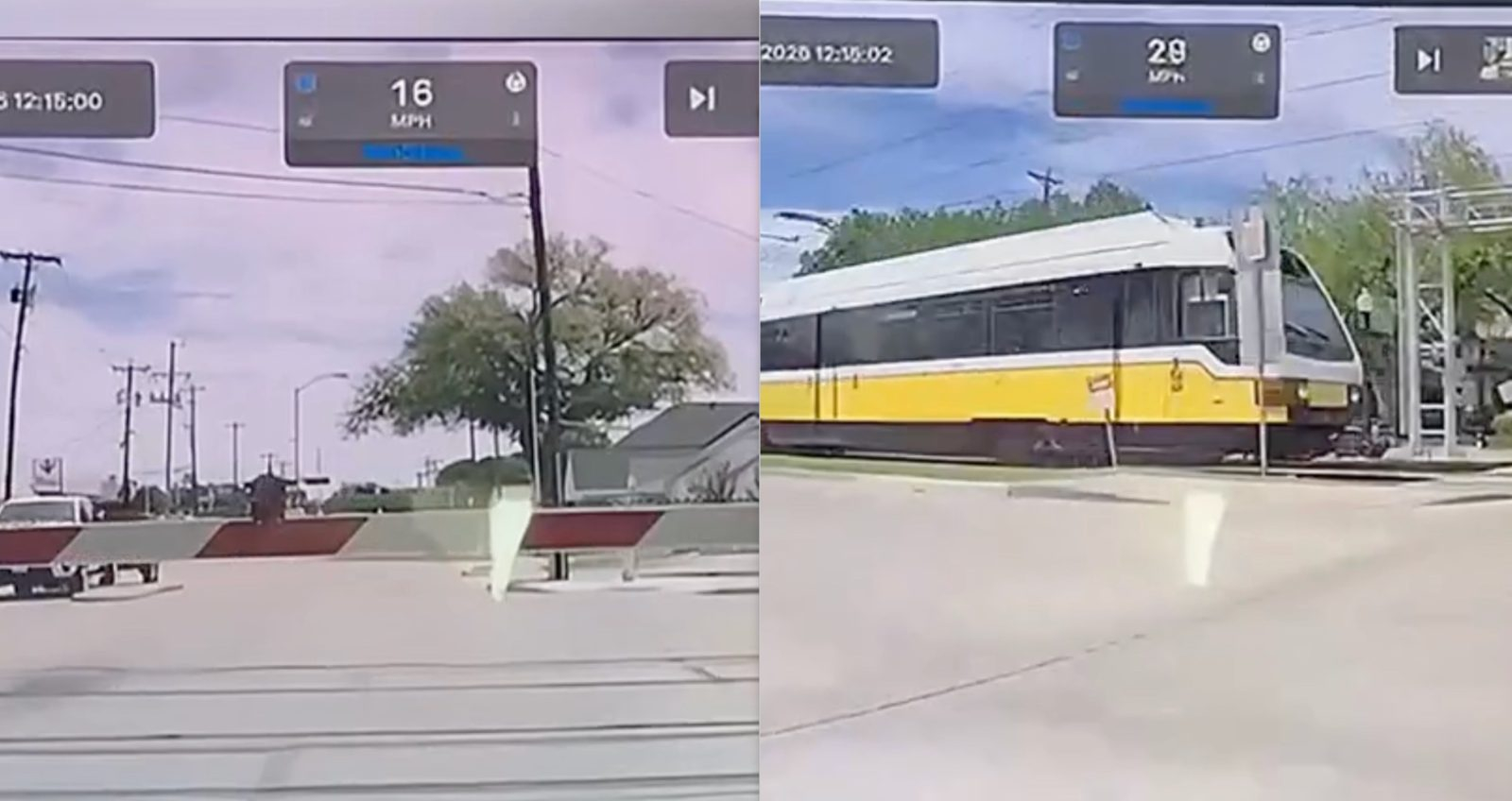
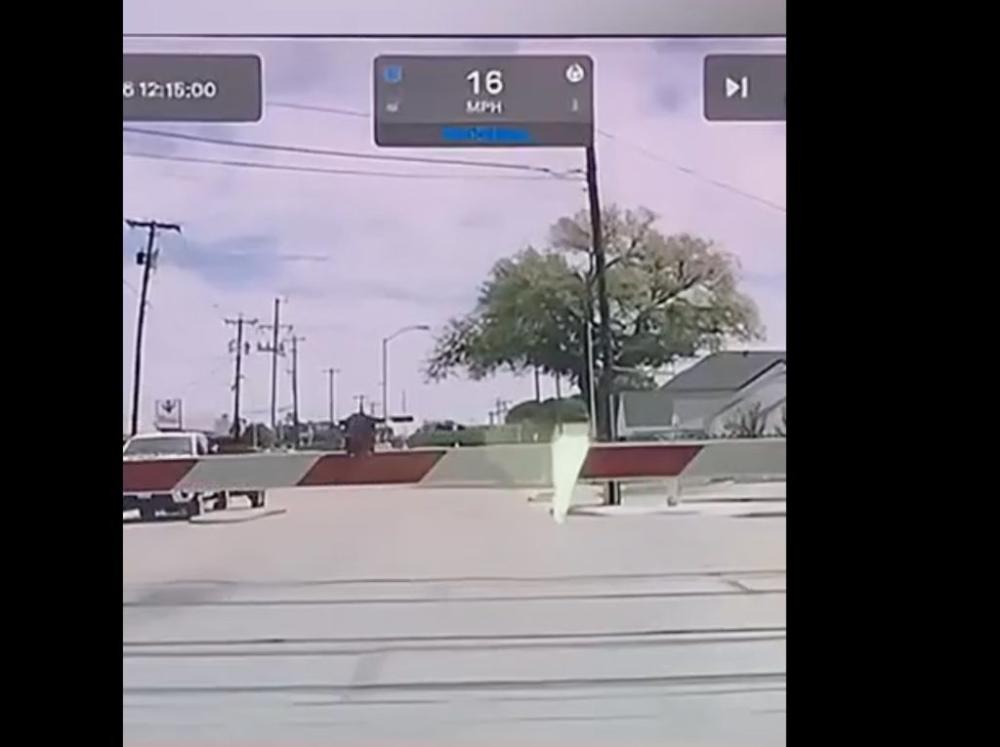
A recent and alarming incident involving a Tesla owner highlights the ongoing debate surrounding the reliability and safety boundaries of Advanced Driver-Assistance Systems (ADAS). Joshua Brown, a Texas-based Tesla owner, recently recounted a harrowing experience where his vehicle, operating on Full Self-Driving (FSD) technology, allegedly accelerated through a lowered railroad crossing arm just as a train approached.
This incident adds to a growing pattern of reports suggesting that current autonomous driving features may struggle with predictable, real-world obstacles—particularly those critical for human safety, like railway barriers.
The Incident: FSD’s Alleged Failure at a Level Crossing
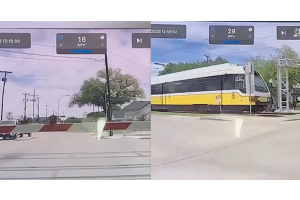
According to Brown’s account, he was stopped at an active level crossing with lights flashing and the barrier lowered. Unexpectedly, the Tesla began accelerating on its own without any warning.
"Without any warning… my Tesla suddenly accelerated forward on its own," Brown stated.
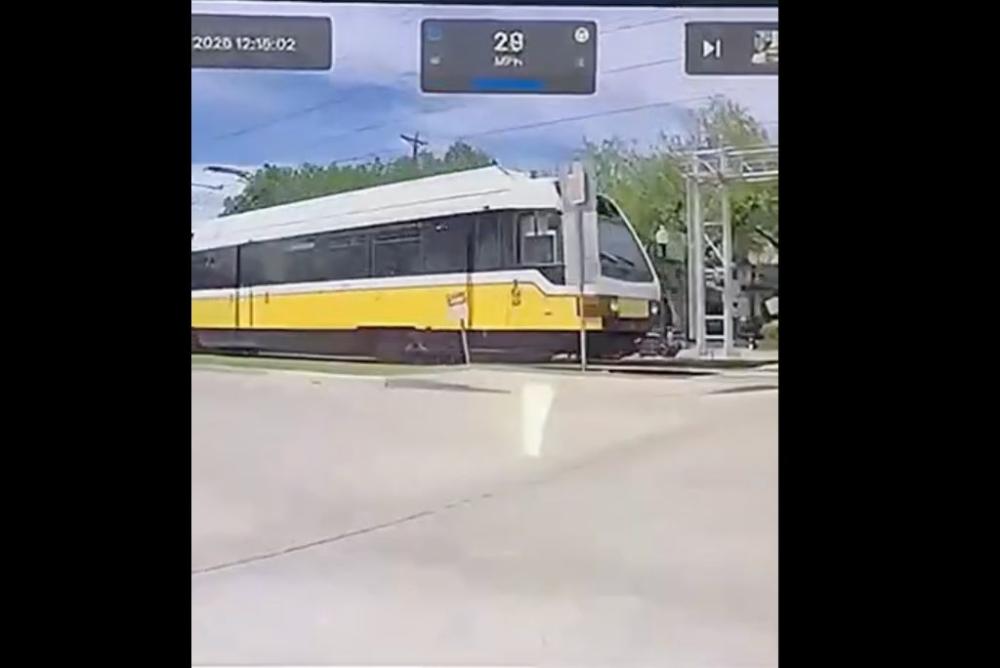
Reacting with the instincts of his racing background, Brown followed the adage "when in doubt, throttle out," flooring the accelerator to clear the tracks before the oncoming train arrived. The vehicle smashed through the lowered crossing arm, sustaining significant damage to the driver’s side, but successfully crossed the rails just seconds before the train passed. Following the ordeal, the Tesla’s touchscreen simply displayed: "Autopilot disengaged, what happened?"
A Pattern of Concern: FSD Failures Under Regulatory Scrutiny
Brown’s experience is not an isolated "glitch." It aligns with a documented pattern that has drawn significant attention from global safety regulators:
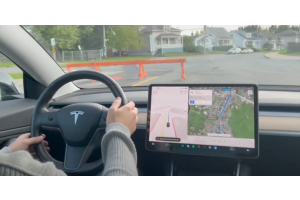
Documented Failures: Previous dashcam footage has captured Model 3 vehicles on FSD driving straight through lowered crossing arms in California and steering onto active tracks.
NHTSA Investigation: These repeated failures have prompted the National Highway Traffic Safety Administration (NHTSA) to launch formal investigations. The agency is currently analyzing FSD's link to numerous reported violations, including improper lane changes and signal disregard.
 Expert Analysis: Understanding the Technology Gap
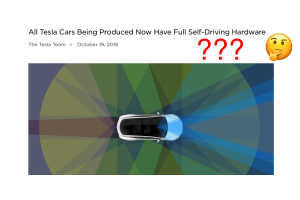
The core concern raised by this incident is the system's inability to recognize a fundamental safety feature. A barrier lowered across a roadway is a universal, unambiguous signal of danger. For an advanced AI system to fail at detecting such a physical obstruction suggests a significant gap in its perception stack.
Expert Analysis: Understanding the Technology Gap
The core concern raised by this incident is the system's inability to recognize a fundamental safety feature. A barrier lowered across a roadway is a universal, unambiguous signal of danger. For an advanced AI system to fail at detecting such a physical obstruction suggests a significant gap in its perception stack.
 Level 2 vs. Full Autonomy
Despite the marketing term "Full Self-Driving," FSD remains a Level 2 system. This requires constant, active supervision. Even Tesla’s leadership has acknowledged that bridging the gap to true human-level safety will require several more years of development.
Industry Response: Addressing "Edge Cases"
In what observers interpreted as a direct response to these safety concerns, Tesla recently rolled out an updated FSD build. The release notes highlighted improved handling for "rare and unusual objects extending, hanging, or leaning into the vehicle path."
However, safety advocates argue that railroad crossings are not "edge cases" but critical infrastructure. They contend that repeated failures constitute a systemic safety defect requiring immediate regulatory oversight.
Conclusion: Human Vigilance Remains Paramount
While autonomous driving promises a future of reduced human error, the current reality is demonstrably fallible. For Tesla owners and ADAS users, the takeaway is clear: Advanced systems are tools, not replacements for human judgment. Until regulatory bodies can verify safety across all real-world hazards, the ultimate responsibility for safe operation remains firmly with the driver.
Level 2 vs. Full Autonomy
Despite the marketing term "Full Self-Driving," FSD remains a Level 2 system. This requires constant, active supervision. Even Tesla’s leadership has acknowledged that bridging the gap to true human-level safety will require several more years of development.
Industry Response: Addressing "Edge Cases"
In what observers interpreted as a direct response to these safety concerns, Tesla recently rolled out an updated FSD build. The release notes highlighted improved handling for "rare and unusual objects extending, hanging, or leaning into the vehicle path."
However, safety advocates argue that railroad crossings are not "edge cases" but critical infrastructure. They contend that repeated failures constitute a systemic safety defect requiring immediate regulatory oversight.
Conclusion: Human Vigilance Remains Paramount
While autonomous driving promises a future of reduced human error, the current reality is demonstrably fallible. For Tesla owners and ADAS users, the takeaway is clear: Advanced systems are tools, not replacements for human judgment. Until regulatory bodies can verify safety across all real-world hazards, the ultimate responsibility for safe operation remains firmly with the driver.
Expert Analysis: Understanding the Technology Gap
The core concern raised by this incident is the system's inability to recognize a fundamental safety feature. A barrier lowered across a roadway is a universal, unambiguous signal of danger. For an advanced AI system to fail at detecting such a physical obstruction suggests a significant gap in its perception stack.
Level 2 vs. Full Autonomy
Despite the marketing term "Full Self-Driving," FSD remains a Level 2 system. This requires constant, active supervision. Even Tesla’s leadership has acknowledged that bridging the gap to true human-level safety will require several more years of development.
Industry Response: Addressing "Edge Cases"
In what observers interpreted as a direct response to these safety concerns, Tesla recently rolled out an updated FSD build. The release notes highlighted improved handling for "rare and unusual objects extending, hanging, or leaning into the vehicle path."
However, safety advocates argue that railroad crossings are not "edge cases" but critical infrastructure. They contend that repeated failures constitute a systemic safety defect requiring immediate regulatory oversight.
Conclusion: Human Vigilance Remains Paramount
While autonomous driving promises a future of reduced human error, the current reality is demonstrably fallible. For Tesla owners and ADAS users, the takeaway is clear: Advanced systems are tools, not replacements for human judgment. Until regulatory bodies can verify safety across all real-world hazards, the ultimate responsibility for safe operation remains firmly with the driver.