The "Be Patient" Problem: Tesla's Struggle to Deliver Full Self-Driving to HW3 Owners
The saga of Tesla's Full Self-Driving (FSD) feature has reached a critical inflection point, particularly for owners of older hardware. A recent incident involving a Dutch Model 3 owner, Mischa Sigtermans, who paid €6,400 for FSD in 2019, perfectly encapsulates the frustration and the core problem: after years of waiting, Tesla's response to the hardware limitation (HW3) was simply to "be patient."
This seemingly dismissive answer is not just an anecdote; it is a symptom of a deeper, growing legal and consumer rights crisis across Europe. As FSD launches in Europe, the hardware disparity between newer AI4 models and older HW3 units is becoming a quantifiable, actionable harm, fueling collective claims against the automaker.
The Confrontation: What Tesla Told the HW3 Owner
Mischa Sigtermans, a Dutch Model 3 owner, initiated a collective claim site for HW3 owners across the EU. When he called Tesla to inquire about the status of FSD on his 2019 vehicle, the conversation revealed a pattern of evasiveness and lack of concrete information.
Key Points from the Call:
- Timeline: When asked when FSD would arrive on HW3, the agent stated there was "no information about when it comes, or if it comes at all."
- Scope of Purchase: When Sigtermans questioned what he had actually paid for—the "full self-drive capability" as listed on his invoice—Tesla confirmed the payment covered the capability, not a specific, limited version.
- Hardware Limitations: When the owner raised the issue of Tesla's own admissions regarding HW3's insufficient capacity for unsupervised FSD, the agent again cited a lack of information.
- The Final Answer: After learning about the 3,000 HW3 owners from 29 countries who had signed up for the collective claim, the agent's final advice was: "You just have to be patient."
The automated closure of the case, followed by a link to book a test drive, only amplified the absurdity of the situation.
Understanding the Hardware Gap: HW3 vs. AI4
The core of the problem lies in the rapidly widening gap between the hardware installed in 2019 (HW3) and the advanced computing power required for modern FSD (AI4).
The Broken Promise Timeline
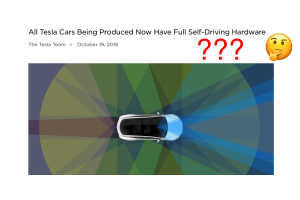
- 2019 Promise: When FSD was sold, it was marketed as a comprehensive software package, implying that the existing hardware was sufficient to enable full autonomy through updates alone.
- The Admission (2024/2025): Tesla's own leadership has since acknowledged that HW3 runs a "relatively smaller model" compared to AI4. Elon Musk later admitted that achieving full, unsupervised FSD would necessitate replacing all HW3 computers.
- The Current Status: Despite these admissions and the clear technical limitations, Tesla has failed to implement a comprehensive hardware retrofit program, offer a refund policy, or provide a concrete timeline. The vague promise of a stripped-down "v14 Lite" for HW3 in 2026 is fundamentally different from the full capability purchased.
This discrepancy—between the promised full capability and the limited, workaround-dependent reality—is the central pillar of the growing legal challenge.
The Legal Front: Why Europe is Different
The timing of FSD's European launch has transformed the HW3 problem from an abstract technical issue into a concrete, financial, and legal one.
The Power of EU Consumer Law
European consumer protection law offers significantly stronger rights compared to the US market. Buyers have robust rights regarding the conformity of advertised features. Countries like the Netherlands, Germany, and France have mature frameworks for collective redress, making it easier for large groups of consumers to challenge corporate misrepresentation.
Sigtermans’ collective claim site, hw3claim.nl, is leveraging this legal environment. By bundling thousands of owners across multiple countries, the claim transforms from individual complaints into a powerful, quantifiable class-action threat, representing millions of euros in disputed purchases.
The Shift from Complaint to Litigation
The legal pressure is mounting rapidly. This is not an isolated incident; it follows similar patterns, such as the class-action lawsuit filed in Australia alleging misrepresentation of FSD capabilities, directly triggered by Musk's HW3 admissions.
The message from the European legal sphere is clear: "Be patient" is insufficient when a company has sold a capability it cannot, and will not, deliver on the existing hardware.
Conclusion: The Inevitable Legal Showdown
The phone call to Tesla serves as a powerful case study in corporate accountability. The company has provided no definitive answer, no retrofit plan, and no refund mechanism.
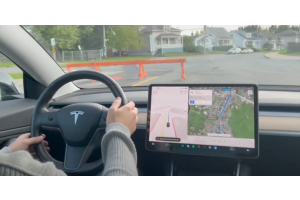
For HW3 owners, the waiting period has an end date—the date FSD launched in Europe. The harm is no longer theoretical; it is visible every time a neighbor with an AI4 car drives with the full FSD Supervised package while the HW3 owner is stuck staring at the "coming soon" message.
As the collective claims grow and EU consumer law provides a clear path for redress, the "be patient" defense is poised to look extremely weak in front of a European judge. This saga highlights a critical lesson for the automotive industry: transparency and timely delivery are non-negotiable when selling advanced, unproven technology.