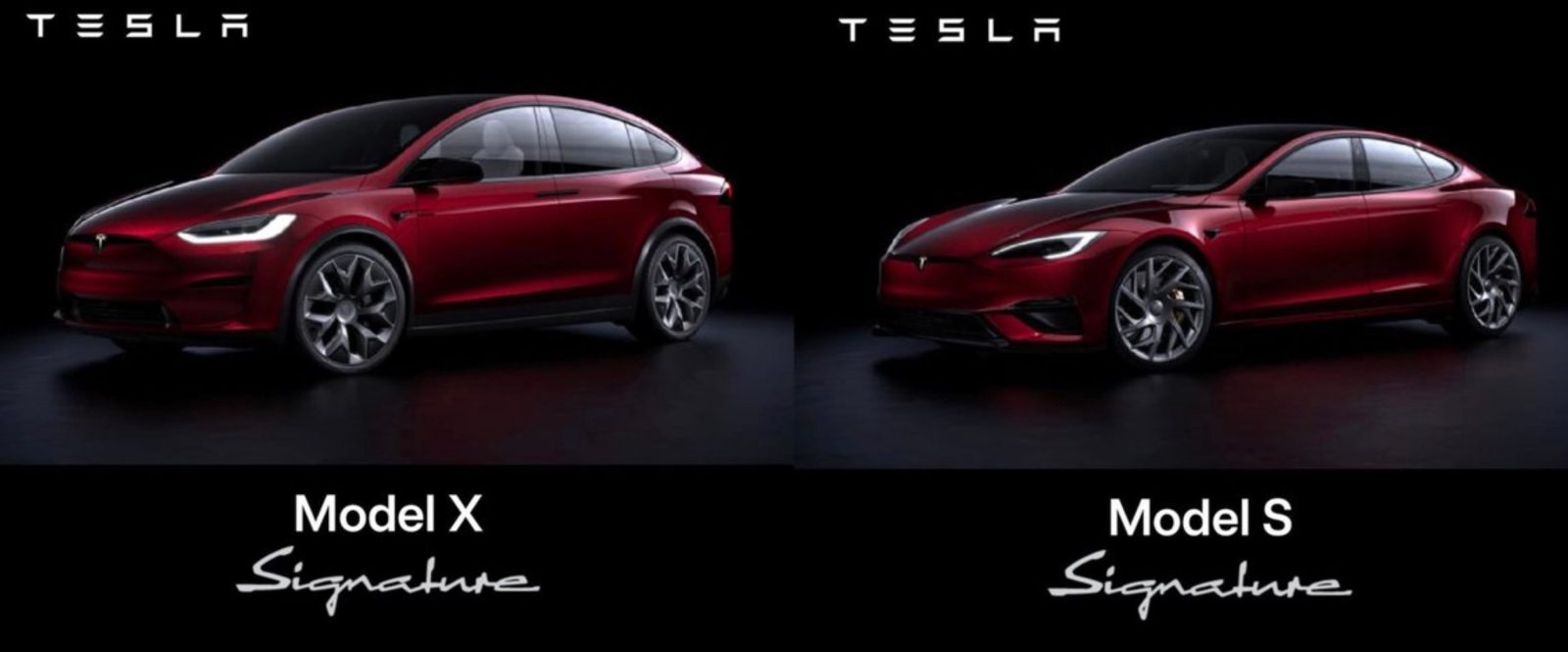
Tesla is reportedly requiring buyers of its highly exclusive Signature Edition Model S and Model X to sign a stringent "No Resale Agreement." This contract carries significant financial penalties—threatening liquidated damages of $50,000 or the full resale value, whichever is greater—if the vehicle is sold within the first year of ownership.
This move signals Tesla's renewed effort to control the secondary market, reviving an anti-flipping strategy similar to one attempted with the Cybertruck a couple of years ago.
Understanding the "Signature Edition No Resale Agreement"
The document, titled "Signature Edition No Resale Agreement," explicitly acknowledges that the Model S and Model X are "limited release" vehicles. It establishes rigorous conditions that owners must adhere to during the initial year of ownership.
Key Restrictions for Owners
The agreement dictates that buyers must not sell, or attempt to sell, the vehicle within the first 12 months following delivery. Should unforeseen circumstances necessitate a sale, the process is highly controlled:
- Right of First Refusal: The owner must notify Tesla in writing and grant the company "reasonable time" to repurchase the vehicle.
- Buyback Calculation: If Tesla exercises its right to buy back the car, the purchase price will be the original cost, minus $0.25 per mile driven, reasonable wear and tear, and the cost required to bring the vehicle up to Tesla’s specified Used Vehicle Cosmetic and Mechanical Standards.
- Third-Party Sales: If Tesla declines to buy the vehicle back but authorizes a third-party sale, the owner must obtain explicit written consent from Tesla before proceeding.
The Aggressive Penalty Clause
The most notable aspect of the agreement is its penalty structure. If a buyer breaches the terms, or if Tesla has a "reasonable belief" that a breach is imminent, the company reserves the right to:
- Seek injunctive relief to block the title transfer.
- Demand liquidated damages amounting to $50,000 or the full sale value, whichever is higher.
- Reserve the right to refuse the buyer any future vehicles from Tesla.
The Context: A High-Value, Limited Release
The Signature Edition was announced as the final farewell for the Model S and Model X, models that have been in production for over a decade. Only 250 Model S units and 100 Model X units will be manufactured, all featuring an exclusive Garnet Red paint job with gold accents, white Alcantara interiors, and numbered dash plaques.
Both models are priced at $159,420 and include the comprehensive Luxe Package, which bundles features like Full Self-Driving (Supervised), lifetime Supercharging, four years of Premium Service, and lifetime Premium Connectivity. Access to these vehicles is strictly invite-only, directed only to select existing owners.
Given the high price point and the extremely limited total supply of only 350 units, the potential secondary market premium is substantial—a scenario Tesla is clearly aiming to preempt.
Comparing to the Cybertruck Experience
This resale restriction is not unprecedented for Tesla. A nearly identical anti-flipping clause was implemented during the Cybertruck launch in late 2023. That original agreement also threatened a $50,000 penalty and a right of first refusal for any resale within the first year.
At the time, early Cybertrucks were commanding secondary market prices ranging from $200,000 to $350,000. The clause became a protracted saga, with Tesla adding, removing, and then quietly dropping the restriction by mid-2024 as supply stabilized and resale premiums diminished.
Why the Signature Edition is Different
The current situation presents a fundamentally different dynamic. With only 350 units ever being produced and no prospect of additional supply, the scarcity is permanent and absolute—unlike the Cybertruck, which was merely supply-constrained early on. While this scarcity makes the restriction theoretically more defensible, questions regarding its practical enforceability remain a point of discussion among industry observers.
Expert Analysis: Enforceability and Market Perception
While the no-resale agreement is understandable given the genuine, permanent scarcity of these collector-grade vehicles, the mechanism itself invites scrutiny.
From a collector car perspective, the inclusion of a right of first refusal and a depreciation formula is standard practice for high-end, limited-run assets. However, the comparison to luxury marques like Ferrari highlights the unusual nature of applying such strict covenants to an EV.
The most significant question remains the practical enforcement. While the $50,000 liquidated damages clause sounds intimidating on paper, pursuing such a claim in court could generate significant negative public relations. Furthermore, many state courts are skeptical of liquidated damages clauses that function more as punitive penalties than genuine, pre-estimated losses.
Ultimately, the most potent deterrent Tesla possesses is likely not the monetary penalty, but the threat of being blacklisted. For an elite buyer invited to purchase a $159,420 limited edition vehicle, the risk of losing access to future, exclusive Tesla models may carry more weight than the stated financial penalty.